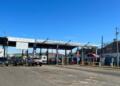
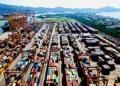
Last September, T21 documented the false starts in Manzanillo : maneuvers canceled even when the driver arrives on time, costs that no one acknowledges, and an appointment system that has become unpredictable. Today, carriers say the problem not only persists but has become more frequent .
Each day begins with the same question: will the appointment go ahead or will it be canceled at the last minute? Among trucking operators and business owners , the constant is the same: showing up doesn’t guarantee getting in, and getting in doesn’t guarantee getting paid.
Truck drivers agreed that the problem has gone beyond mere operational issues, becoming a drain on both resources and personnel that no one is compensating for. Yax Tzel Nolasco Gómez, president of the Manzanillo Freight Carriers Union (UTCM) , described a scenario where costs skyrocket even when the truck doesn’t even make it into the port. As he explained, “We’ve already spent money on diesel, we’ve spent money… we used a driver, who had to sit there waiting.” This downtime, paid for out of our own pockets, ends up becoming a bill that often no one wants to absorb.
Claiming payment for fraudulent freight has become a technical battle . Carriers must provide meticulous evidence : GPS movements, complete traceability, photographs, and even the so-called “mirror account,” which confirms that the vehicle was indeed in the queue. Even so, the response from clients is often evasive. Antonio Chávez Camacho, general manager of JJAE Transportaciones , summarized it this way: “It’s sometimes the only way to get payment for fraudulent freight,” emphasizing that, even with proof, payment often doesn’t materialize.
The frustration stems not only from the wait, but also from the lack of improvement despite months of meetings . Chávez acknowledged that they have held multiple working sessions with the National Port System Administration (Asipona) Manzanillo and the terminals, but the outcome is discouraging: “The situation remains the same; we’re still looking for someone to blame instead of solutions.” Furthermore, he admitted that “there is no solution. There is no… any improvement whatsoever.”
Nolasco Gómez agreed that there has been no progress and pointed to an additional factor: the port access works , which have dragged on for years without results. “These works… which should have been finished by now, have been going on for almost three years,” he stated, emphasizing that this delay maintains a domino effect that is felt every day. Although customs recently announced a temporary extension of operating hours, the adjustment seems insufficient: “It will close at 10 p.m., it’s temporary, but it doesn’t do much good.”
Adding to this economic strain is a phenomenon that deeply worries transporters: the resignation of drivers , tired of the operational stress and the conditions they face during maneuvers. Chávez warned that “this is causing even more drivers to leave,” both on the road and in last-mile delivery, a trend that exacerbates the shortage of specialized personnel in the region.
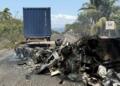
Security has also deteriorated . Amid uncontrolled, drawn-out waits, looting has been reported right in the queue. Chávez recounted a recent case: “They were already being robbed in the lines,” a demonstration that the idle time not only represents economic losses, but also risks to the physical safety of the operators and the cargo.
The sector acknowledged that communication with the authorities exists, but tangible solutions are urgently needed . Meanwhile, each missed appointment represents wasted diesel, unpaid work hours, emotional strain, and vehicles that aren’t generating income . And although the appointment system was designed to streamline operations, today it’s seen by the carriers themselves as a mechanism that, in practice, multiplies rejections and shifts the costs to those with the least margin to absorb them.
Comment and follow us on X: @karinaquintero / @GrupoT21