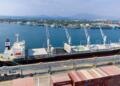
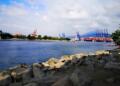
With 200 years of port history, Manzanillo has established itself as the most important logistics hub in the Mexican Pacific. Since its establishment in 1825 as a deep-sea and coastal port, it has overcome political, geographical, and operational challenges to become the country’s leading container port and one of the most important in Latin America.
Infrastructure development was key to its growth. At the end of the 19th century, under the Porfiriato, fundamental works such as the breakwater and the dredging of the access channel were built. In 1908, the railway connection with Guadalajara and Mexico City marked a turning point in its logistical integration. Decades later, the construction of the San Pedrito complex, inaugurated in 1970, laid the foundation for its modern transformation.


Currently, the Port of Manzanillo handles more than 23.5 million tons of containerized cargo annually and maintains a steady flow of operations with more than 1,700 arrivals annually. These figures confirm its role in the regional and national logistics network.
A structural change occurred in December 2020, with the transfer of port functions to the Ministry of the Navy (Semar) . The transformation of the APIs into ASIPONAS, as is the case in Manzanillo, allowed for management focused on safety, sustainability, and operational efficiency under a strategic model led by officials with an administrative and commercial vision. This new phase prioritizes sustainable growth, private investment, intermodal connections, and harmony with the city through the Port-City program.
In response to projected cargo increases at the Port of San Pedrito, the ambitious development of the New Port of Manzanillo-Cuyutlán began in 2024. This new logistics platform covers more than 1,880 hectares in the Cuyutlán Lagoon’s Vaso II basin. This new logistics platform includes two specialized container terminals with the capacity to handle up to five million TEUs, 1,500-meter docks, two oil terminals, a new Pemex complex, dredged channels for mega-ships, maneuvering bays, customs infrastructure, rail connections, elevated viaducts, and clean energy through natural gas.
The project seeks to position Manzanillo as the most modern and sustainable port in Latin America. It is estimated to generate tariff revenue of up to 450 billion pesos and 10 billion pesos in compensation, with the potential to double its current capacity and climb to the top 15 of the world’s most important ports.
Manzanillo’s bicentennial is more than a historical commemoration: it marks the beginning of a new port era under the direction of the Semar (National Maritime Service), consolidating Manzanillo as Mexico’s strategic logistics hub for the 21st century.
Comment and follow us on X: @GrupoT21