SAN PEDRO GARZA GARCÍA, NL – In Monterrey, an unlikely alliance between a global appliance manufacturer and two logistics giants has become a paradigm-challenging model of efficiency. While many companies continue to rely blindly on trucking as the backbone of their supply chain, LG Electronics , Union Pacific , and Matson Logistics have demonstrated that intermodal—the combination of truck and rail—can be synonymous with resilience, cost savings, and precision . It hasn’t been a linear path, but rather a story of strategic vision and long-term collaboration.
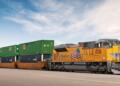
For José González, Logistics Director at LG Electronics in Mexico, it all began with an urgent need: “The hardest part was internally convincing everyone of a project that could bring significant cost savings, and then came the execution.” The company, with production centers in Mexico and a growing export volume to the United States, faced a bottleneck at the border: a shortage of operators, cost overruns, and an overcrowded infrastructure. The solution came not from a new road system, but from a locomotive capable of transporting between 180 and 220 containers in a single trip.
The change wasn’t immediate. It required modifying production lines and plans, adapting inventories, and, above all, changing the internal mindset regarding rail. “Internally, everyone knows the truck service: you take it here, drive four hours to the border, and that’s it. But the intermodal issue is different: you have to sell it with a clear cost-benefit ratio,” González explained during his participation in the panel “Success Story: LG White Goods and Appliances” at the Transportation and Logistics Meeting (ETYL) Monterrey 2025 , organized by T21.
The result was overwhelming: the company’s storage area was reduced from 30,000 to 9,000 square meters, freeing up space for new production lines.
Two key partners were involved in the equation: Union Pacific, with its US rail network, and Matson Logistics, as the service integrator. The pandemic tested everyone’s ability to adapt. “From shipping 80 containers a week, they suddenly wanted 300 or 400. The big challenge was rail planning; moving trains involves much more than reacting overnight,” recalled Enrique Leal, Branch Manager at Matson. To address this challenge, Matson incorporated its own fleet, and Union Pacific repositioned equipment from areas as far away as Texas.
One of the determining factors was three-way communication. “Communication was very efficient, and interaction was the best,” González emphasized. This synergy allowed LG, amid global disruption, to maintain on-time deliveries, reduce its carbon footprint, and achieve more competitive costs. Daniela Zarza, Business Director – Premium at Union Pacific, emphasized that prejudices about the train still exist: “It’s incredible that at this point, there are still people who, when you say you’re going to sell intermodal, tell you it takes weeks. That’s not the case. Today, a Monterrey-Los Angeles trip takes four days.”
Long-term strategy was another pillar. For five or six years, LG relied on a system that was initially more expensive than highway travel, anticipating that rising operator costs would balance the scales. “It took us a while for that jelly to gel, but when it did, it became a constant and resounding success,” González said. The savings exceeded $200 per shipment, a decisive factor for an Asian company where every cent counts.
Operational discipline was also key. LG went from moving 40% of its volume through intermodal in 2020 to 84.3% today. This transition not only involved internal adjustments but also mutual commitment programs with Union Pacific. Zarza explained: “Every week we measure performance against the forecast . It’s key to planning and delivering for clients like LG, a very large account for us.” On the integrator side, Matson reinforced safety stocks and supported the client at every point in the chain, from the ramp to final delivery.
The environmental dimension is no small matter. Zarza shared a revealing fact: if just 10% of the freight currently moved by road were to migrate to rail, the impact would be equivalent to removing 51 million vehicles from circulation or planting 40 million trees. Intermodal transport not only represents economic efficiency but also a strategy for meeting increasingly demanding sustainability goals.
The benefits are also reflected in security. By mapping vulnerabilities and adjusting practices, LG was able to reduce seal violations from 10 to 15 times a month to zero, simply by removing distinctive markings on its containers. Furthermore, Union Pacific’s institutional support from U.S. authorities opened doors that were previously inaccessible to them as an individual company. “We approached them through Union Pacific, and the next day we were there. That was a wow for us!” González said.
The case of LG, Union Pacific, and Matson is a lesson in patience, communication, and loyalty. “I believe there are three fundamental themes: patience, because it won’t go down the first day; communication, because if you’re not in constant communication, you’re nothing; and resilience, because this is a long-term issue,” González summarized. Leal added: “It’s very difficult to find loyalty in customers; often, they’ll change you at the first mistake. But when there’s a long-term vision, the partnership becomes real.”
For the industry, the message is clear: opening up to intermodal isn’t a fad, it’s a strategic decision. “Try it,” Zarza recommended. “Don’t get stuck with ideas from 20 years ago. Service design is constantly changing, modernizing, and integrating new routes and alliances. This is evolving.”
The logistics roller coaster will continue to experience ups and downs—pandemics, migrants, tariffs, and port blockages— but this case demonstrates that with planning, communication, and a shared vision, it’s possible to build stronger, more sustainable, and more competitive supply chains. LG, Union Pacific, and Matson not only didn’t miss the boat: they turned it into their strategic advantage.
Comment and follow us on X: @EnriqueDuRio / @GrupoT21