Maritime transport in Mexico begins 2026 under a combination of structural pressure and strategic opportunity that compels the sector to accelerate decision-making. The relocation of supply chains, the energy transition, and the redefinition of trade routes are reshaping the global landscape, and in this context, the country faces a pivotal year to transform these changes into a real logistical advantage, warned José Manuel Urreta Ortega, president of the Mexican Chamber of the Maritime Transport Industry (Cameintram) .
“During 2026, shipping companies face various challenges determined by the transformation imposed by a supply chain relocation economy and the global decarbonization process of the maritime sector,” the business leader explained, emphasizing that these factors not only increase operational complexity but also redefine Mexico’s competitive position in international trade.
One of the most immediate milestones is the completion of the Interoceanic Corridor of the Isthmus of Tehuantepec (CIIT), scheduled for June. For the shipping sector, this project marks a turning point in the country’s interoceanic connectivity. “We hope to position this multimodal logistics platform as a strategic alternative to the Panama Canal for trade between the Atlantic and Pacific,” stated Urreta Ortega, envisioning a scenario in which Mexico ceases to be merely a transit territory and becomes a direct link in maritime and land traffic.
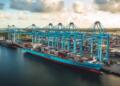
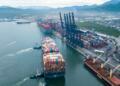
This commitment is complemented by a package of port investments that represents the largest share of public resources allocated for 2026. The modernization of the ports of Altamira, Progreso, Lázaro Cárdenas, and Salina Cruz, along with the expansion of the Port of Veracruz and the development of the New Port of Manzanillo , aims to substantially increase the operational capacity of the port system. “We expect to substantially increase the number of maritime operations, as well as reduce times and costs,” stated the president of Cameintram, making it clear that the impact of these projects will be measured in terms of efficiency and competitiveness, not just physical infrastructure.
However, the sector warns that the challenge is not limited to building or expanding ports. For these investments to translate into tangible results, it will be essential to resolve long-standing issues in security, connectivity, and regulation. “It is necessary to implement actions that allow us to increase security and connectivity in cabotage operations,” noted Urreta Ortega , who emphasized streamlining customs procedures and modernizing the fleet as key conditions for short-sea shipping to gain ground against other modes.
Digitalization emerges as another decisive factor in this equation. According to the shipping leader, terminal automation and the adoption of technologies such as the Internet of Things will improve fleet management and real-time cargo monitoring, at a time when logistical efficiency has become a competitive advantage over other countries also seeking to attract flows derived from nearshoring (relocation of production lines to consumption centers).
All of this is happening in an international environment marked by trade uncertainty. Stricter rules of origin and tariff quotas are coexisting with a reorganization of global supply chains and the opening of new maritime routes. “While there is high trade uncertainty at the global level, the global reorganization of supply chains and the reconfiguration of maritime routes such as those in the Arctic continue to represent significant areas of opportunity,” said Urreta Ortega, who emphasized that the outcome of negotiations with the United States, Canada, and the European Union will be crucial for Mexico’s international standing.
The environmental agenda completes the map of risks and opportunities. The president of Cameintram highlighted that Mexico has the potential to become a regional hub for zero-emission marine fuel supplies, taking advantage of the transition to biofuels, electrofuels, and green hydrogen. “Mexico has the opportunity to position itself as a zero-emission marine fuel supply center in Latin America,” he stated, while reiterating the need to advance on the decarbonization path to comply with global agreements promoted by the International Maritime Organization and avoid operational restrictions and increasing regulatory costs.
With this outlook, 2026 is shaping up to be a defining year for Mexican maritime transport: one in which the speed with which projects, reforms, and environmental commitments are translated into concrete results will make the difference between taking advantage of the global moment or falling behind in an increasingly intense logistics competition.
Comment and follow us on X: @GrupoT21