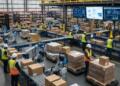
Industry 4.0 , also known as the fourth industrial revolution, is redefining logistics and the supply chain in Mexico, with the use of Artificial Intelligence (AI), digital twins (virtual representations of an object or system), and other technologies that have improved business efficiency.
“One of the biggest impacts has been the digitalization of processes, which enables rapid feedback and real-time visibility throughout the entire supply chain. Previously, adjusting an operation to a change in demand took weeks; today, thanks to these tools, those adjustments can be made in hours, making logistics much more agile and responsive,” explained Carol Prieto , VP of Program Management at Flex , a firm that offers manufacturing and supply chain services.
The specialist emphasized that digitalization has transformed logistics processes , such as the application of these technologies to optimize the filling of interoceanic containers.
“Thanks to digital models and data analysis of weights, dimensions, and other factors, we have been able to identify the ideal cargo combination to maximize space utilization, reduce emissions, and improve logistics resource management,” he explained in an interview with T21.
Another enabler that has improved logistics is digital twins, which, combined with AI, allow for scenario modeling, route optimization , and improved operational efficiency without resorting to traditional manual trial-and-error methods.
Industry 4.0 in supply chains
At Flex, Industry 4.0 is based on two fundamental pillars: smart manufacturing and the use of robots and cobots (collaborative robots) , explained Prieto, who indicated that both elements combine to transform traditional production models and make them more efficient, predictable, and sustainable.


Based on this foundation, supply chains are now more efficient, connected, and secure, and among their benefits is the optimization of physical space .
“The use of robots in warehouses is increasingly common and has significantly reduced storage space, minimized risks for employees, and accelerated operating times. By eliminating the need for wide aisles or manual operations, the use of physical space is optimized and security in the logistics environment is increased,” he noted.
According to Gartner , a consulting firm, the use of robots in warehouses can increase productivity by up to 40 percent and reduce operational errors by 50 percent.
Also, digitalization and the use of AI allow for real-time visibility of the entire operational flow .
“This translates into improved planning capabilities and faster response to changes in demand, disruptions, or customer needs. For example, today we can detect alerts early and eliminate waste throughout the supply chain, from origin to final delivery,” the specialist emphasized.
According to a study by the consulting firm McKinsey & Company , digitalization in logistics can reduce operating costs by up to 30% by improving visibility and efficiency in the supply chain.
“Today, we can know exactly when a load will be ready, which allows us to precisely coordinate the arrival of carriers. This prevents operators from having to make unnecessary trips due to incomplete loads, something that was common before,” Prieto said.
For Carol, technology and better planning “have allowed logistical emergencies to become the exception rather than the rule, which translates, among other things, into less fuel used and better operational efficiency.”
In which sectors is it applied?
In Mexico, sectors such as automotive, telecommunications, data centers, and medical devices are leading the adoption of Industry 4.0. The need for reliable and traceable processes in these industries makes digitalization and robotics essential, reinforcing operational efficiency with human talent.
Sustainability is another benefit of this technology, as optimizing processes reduces energy, material, and time consumption . “Sustainability isn’t an isolated result; it’s a reflection of better-informed, smarter, and long-term processes,” he said.
Regarding smart manufacturing , Carol Prieto said it began with digitalization processes that enabled real-time data capture, connected systems, and enabled traceability throughout the entire value chain . Later, with the incorporation of technologies such as AI, machine learning , and predictive analytics, this digitalization evolved into autonomous, data-driven decision-making.
Comment and follow us on X: @Eliseosfield / @GrupoT21