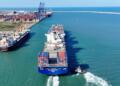
The 1990s are considered a historically emblematic period for the development of ports in Mexico as we know them today. The 1991 takeover of the port of Veracruz set a precedent for the path the federal government would take, through a new public policy that allowed for private investment in these maritime infrastructures through state administration . The objective was to regain the unions’ control over the ports.
Greater trade integration with North America was on the horizon. The country had entered into trade negotiations (1990) with the governments of the United States and Canada to join the North American Free Trade Agreement (NAFTA), which came into effect on January 1, 1994, and which would make this geographic area the largest consumer and production hub in the world. Having port infrastructure that could meet this major challenge of globalization was essential .
The rest of the countries were also preparing, to a greater or lesser extent, for the rapidly unfolding explosion of global containerization. In Mexico, the fate of the ports was beginning to be mapped out. These would become key players in supporting the policy of greater trade openness with the world.
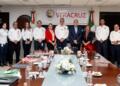
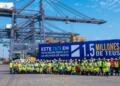
It was in the port of Veracruz itself where the Mexican government, specifically the newly created Integral Port Authority (API) Veracruz, granted the country’s first port concession in 1995 to a private company under the new Port Law, enacted the year before. This concession was for International Container Association of Veracruz (ICAVE) , to operate a specialized container terminal, initially with only four hectares and 200 linear meters (m) of dock; later, under the terms of the concession, it would expand to 504 m of dock and 42 hectares.
The origin of ICAVE is shared by two companies that bet on that nascent port business: the Mexican Ingenieros Civiles Asociados (ICA) and the Philippine International Container Terminal Services, Inc. (ICTSI) , which in their recruitment process of senior executives were kind enough to hire Jorge Magno Lecona Ruiz as their Director of Operations, who had developed experience in maritime-port issues from the public sector, without knowing that he and his team would become the architects of the company’s expansion beyond the Veracruz coast.
If you’d like to continue reading this business story, we invite you to visit our August issue of T21 magazine by clicking here to go to the digital version .


Comment and follow us on X: @GrupoT21