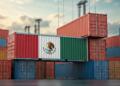
The heavy-duty transport sector faces a particularly complex situation: as the world advances in a technological and mobility transition, Mexico must negotiate a revision of the United States-Mexico-Canada Agreement (USMCA) under a climate of uncertainty and external pressure.
During the XXIII International Congress of the Automotive Industry in Mexico (CIIAM) , Rogelio Arzate, executive president of the National Association of Bus, Truck and Tractor Producers (ANPACT) , warned that there is no viability for profound changes in the midst of this transition, so attention should focus on strengthening the integration of North America .
“Components cross the border up to seven times before being incorporated into a final vehicle,” he said, emphasizing that regional interdependence cannot be ignored.
Arzate also listed the structural issues facing the industry in Mexico: sufficient clean fuels to operate Euro VI technologies, urgent road improvements and maintenance of logistics infrastructure, and security in key corridors.
He noted that although the industry already offers the latest emissions technologies , the lack of reduced-sulfur diesel across the country is hindering its full adoption.
ANPACT’s vision, he said, is for customs, infrastructure, and transportation logistics to become catalysts for competitiveness.
He emphasized that rail projects represent an opportunity for freight transportation, since “any train that moves goods will eventually require heavy vehicles to complete the last mile.”
In view of the USMCA review, Arzate emphasized that Mexico must strengthen its competitiveness in the heavy-duty transport sector, ensuring a level playing field with its partners, clear rules, and conditions that attract investment without slowing fleet renewal.
(Main image source: INA) .
Comment and follow us on X: @karinaquintero / @GrupoT21