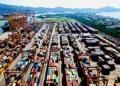
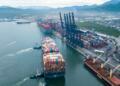
For a quarter of a century, GOLMEX has built an infrastructure that transformed the handling of perishable goods at the port of Veracruz . Its story is not just that of a specialized operator, but of a company that identified a gap in the country’s animal and plant health services and decided to fill that gap with a long-term logistical vision. From its inception, by focusing on refrigerated services at a port lacking modern capabilities, the company opened markets, professionalized the inspection of sensitive cargo, and became a silent support for exporters and importers who depend on strict timelines and standardized processes.
The first major turning point came in 2005, when GOLMEX expanded its refrigeration facilities and opened its first SADER Animal Health Inspection Point , a milestone that streamlined the flow of animal goods and ensured the integrity of products requiring specialized verification. Two years later, in 2007, the company obtained certification to operate the Phytosanitary Inspection Point , consolidating a comprehensive offering for handling agricultural cargo and increasing its operational capacity with 16 service doors, 200 connections, and 20 generator sets for refrigerated containers—an unusual platform for the port at the time.
Growth didn’t stop there. In 2015, GOLMEX opened the Phytosanitary and Zoosanitary Inspection Point for dry goods , a 20-door facility that expanded its reach beyond perishables and strengthened its presence in operations requiring speed, traceability, and strict sanitary conditions. These three points, located within the port, cemented the company’s reputation as a technical operator capable of meeting the demands of sectors such as agriculture, meat, and pharmaceuticals, where sanitary certification is as crucial as maintaining the cold chain.
The strategic leap forward came with the development of Logistics Center 13 ½ , designed to decentralize processes and address the natural saturation of the port area. Located five kilometers from the main entrance to the Port of Veracruz, this 170,000-square-meter complex houses the first SADER Refrigerated External Inspection Point, with 20 operational doors, 100 container connections, and the capacity to perform up to 70 inspections during regular hours, in addition to 50 cross-docking operations daily. This external point reshaped operations: it allowed cargo to be moved without entering the port, reduced storage costs, and eliminated the need for customs clearance to retrieve samples sent to the laboratory.


The expansion also included the External Dry Inspection Point , with 12 operational access points, which, combined with GOLMEX ‘s internal infrastructure, brings the total to 36 gates for phytosanitary and zoosanitary inspection of perishable goods, 300 connections for refrigerated containers, and 32 positions for dry cargo inspection . This critical mass of infrastructure has made the company a regional benchmark for SADER services, a position sustained by 24/7 availability, greater maneuvering space, and processes that minimize bottlenecks in a port where every minute defines costs.
The company also anticipated the growth trend in Mexican foreign trade. With territorial reserves for expansion, GOLMEX plans to increase its Refrigerated External Inspection Point to 51 operational gates and its Dry External Inspection Point to 47, an expansion that reinforces its commitment to absorbing greater demand in sectors that cannot afford to wait.
Over the past 25 years, GOLMEX has evolved from a port operator to a strategic component of the healthcare system in Veracruz. Its infrastructure supports processes that, while invisible to the consumer, determine the competitiveness of the agri-food and pharmaceutical supply chains that depend on the port. In an environment of increasing regulatory pressure and accelerating volumes, its logistics model demonstrates that healthcare efficiency is not a mere formality, but a structural advantage that influences costs, timelines, and international confidence. Its track record confirms that modern logistics is built from the points that almost no one looks at: inspection gates, available energy, extended shifts, and the ability to anticipate what the market will demand tomorrow .
Comment and follow us on X: @GrupoT21