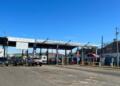
Seven hours have passed, and the tractor-trailer isn’t moving . The engine is still running, the diesel is burning, the driver waits among hundreds of units that also can’t get across. Finally, the notification arrives: the appointment is canceled , and the unit must return.
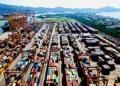
In the port of Manzanillo, this everyday scene has a name: False start .
These maneuvers are frustrated even when operators comply on time and in compliance. The result is a cost that few clients are willing to acknowledge. Julio Mora , general director of Servicios Portuarios AM, explained: “The intention is always to collect, but not all clients pay. It’s not the client’s or the carrier’s fault; we document with GPS, but the problem is beyond our control.”
Access to the port depends on the Electronic Appointment Document (EDD) , managed through the Secure Intelligent Port (SIP) system . In theory, operators say, this system seeks to regulate truck access and avoid congestion; in practice, it has become another source of conflict .
Transporters reported that appointments are frequently blocked at the last minute or “burned out” because the line didn’t move in time. Constant communications from the Manzanillo Port Community (Copoma) indicate that when a terminal experiences problems, access is segmented and operators are asked to wait outside.

In evidence shared with this outlet, screenshots of canceled appointments can be seen in real time, even though the units were already en route to the port of Manzanillo.
This creates backlogs that, according to the carriers’ own calculations, amount to hundreds of missed appointments per day. And if an appointment “blows up,” rescheduling can take up to three or four days , during which time the container’s demurrage is charged, passing the cost on to importers and exporters.
The story is seen by the protagonists as a “Stations of the Cross,” as expressed by Antonio Chávez Camacho , general director of JJAE Transportaciones , who summed it up bluntly: “ When appointments are after noon, it is almost impossible to leave. It can take up to seven hours and in the end they tell you that you cannot enter. That means wasted fuel and, above all, wear and tear for the operator . ”
Transporters interviewed by T21 reported that they must constantly send evidence: photos every time the vehicle moves a few meters, screenshots from GPS mirror accounts, and proof that they were in line. Even so, excuses from customers who refuse payment abound.
“For example, when it comes to false transactions, many clients think twice after 4 p.m. From 12 p.m. onward, it’s a struggle to get paid. They come up with all kinds of excuses,” explained one operator, referring to the transactions that remain unsettled.
The problem, other interviewees agree, is that even when carriers comply with all the requirements, customers or intermediaries look for ways to avoid payment.
“Unfortunately, if the customer or the ‘coyote’ doesn’t want to pay, they’ll find any excuse,” warned another operator. He explained that, in one case involving 10 fulles, he was only able to obtain payment because he backed up each transaction with an automated tracking system, which generates a log every 10 minutes and uses geofences to confirm whether the unit was in line.


Even when units do manage to enter, customs may flag a “red” and prolong the wait for days.
“There are cases of colleagues who have waited up to 72 hours ,” Mora said.
Waiting means travel expenses for the operator, fuel, and, in many cases, overnight stays inside the terminal. According to Chávez, the most serious bottleneck is at the entrances. Long lines not only mean additional costs, but also undignified conditions for the operators .
Adding to this strain is the lack of basic services during long waits: operators must spend the night in the cabin, without restrooms or adequate rest areas, with the engine running to endure the hours of inactivity.
“ We keep the appointments they themselves make, but we end up being the visible culprits. Inside, the courtyards are empty, but outside, everything is collapsed ,” he emphasized.
Productivity in free fall
According to Julio Mora, the breaking point came last April, when customs reduced staff and modified inspection processes, which plummeted productivity.
According to its records, before that month the port of Manzanillo reported around 5,000 daily operations , while today it barely reaches 1,500 , which implies a 70 percent drop.
“It’s wasted time, a non-renewable resource. That was a unit that no longer received any payment, that couldn’t get on the road,” Mora said.
The Manzanillo Port Community offers another version. According to its general director, Héctor Osiris Venancio Pimentel, operations are at 93% to 95% compliance, with peaks of up to 3,500 containers per day. He acknowledged that last May there was overcrowding due to a lack of personnel at customs.
While figures from the National Port System Administration (Asipona) Manzanillo report that in July 2025, 111,602 vehicles entered the port, that is, an average of 3,600 trucks per day.

In contrast, for transporters, the infrastructure has not grown at the same pace as the port , and external roads remain the biggest bottleneck.
“The port has been growing year after year, but the infrastructure has never expanded. The new access only shifted traffic,” Mora pointed out.

And whose fault is it?
While operators spend nights in line, with engines running, and shifts that drag on without certainty, the authorities have insisted that compliance depends on respecting the schedule tolerance.
“If you show up an hour early, they won’t let you in. The tolerance is 15 minutes before and one hour fifteen minutes after,” explained the general director of the Manzanillo Port Community.
From the transporters’ perspective, the demand goes in another direction: substantial investment . “If the government presumes that revenue has increased, they should allocate a percentage of those taxes to the port. They should carry out projects with a 20- or 30-year vision, not just aspirin,” Mora demanded.
The discussion makes it clear that false starts and delays don’t just affect shippers: every lost day translates into container detention, delivery delays, and additional costs that end up on the customer’s account.
While official reports speak of efficiency and tolerance, operators describe unpaid workdays and a system that is becoming unsustainable . This contrast epitomizes the Manzanillo paradox: a driving force of foreign trade that, if its flaws are not corrected, will continue to pass on its bottleneck to those who depend on it.
Comment and follow us on X: @karinaquintero / @GrupoT21