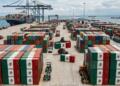
On September 9, the Chamber of Deputies received two reform initiatives from Mexican President Claudia Sheinbaum aimed at modernizing the regulatory framework for foreign trade: the Customs Law and the General Import and Export Tax Law .
The reform proposal represents one of the most important economic projects of the new administration, as part of the 2026 Economic Package . Its objective is to modernize, strengthen, and optimize Mexican customs legislation so that all actors involved in foreign trade can carry out their activities more efficiently.
This will be achieved by modernizing customs, strengthening customs authority controls, and establishing effective mechanisms to guarantee the payment of contributions in foreign trade operations.
“Customs legislation is crucial for our country’s trade and fiscal policy. In this sense, one of the pillars of the current government’s public policy is to combat tax evasion and avoidance and, consequently, increase federal revenue collection, boosting public revenues that strengthen the country’s financial sustainability, but without the need to increase or create new contributions and other tax burdens for citizens,” the document stated.
However, this attempt to reform the Customs Law comes at a time when Mexico’s foreign trade is experiencing uncertainty.
Yesterday, Kenneth Smith, president of the Mexico-United States Committee of the Mexican Business Council for Foreign Trade, Investment and Technology (Comce) , warned that the initiative to reform the Customs Law being prepared by the Mexican government could become an opportunity to streamline foreign trade or, on the contrary, a barrier that affects regional competitiveness .
Smith noted that legal changes should focus on simplifying procedures, making processes more transparent, and strengthening cooperation with U.S. customs agencies and other trading partners . This would combat technical smuggling and the triangulation of goods, particularly those originating in China, while also encouraging greater use of the United States-Mexico-Canada Agreement (USMCA) .
However, he warned that if the reforms impose excessive requirements that complicate the work of customs agents or restrict exports, the United States will closely monitor these measures, as they could translate into technical barriers to trade.
“The Customs Law can be the gateway to trade growth between Mexico and the United States, or it can become a barrier,” he said.
In this regard, Fernando Ramos, a foreign trade consultant, mentioned in his column En sentido contrario (In the Opposite Direction ), published in T21, that if the reform to the Customs Law advances in the sense of toughening sanctions against customs agents and importers , the impact could be counterproductive for foreign trade.
He explained that, faced with greater legal and financial risk, many agents would choose not to ship certain goods , which would create a bottleneck in import and export operations.
The problem is that time and space conditions in customs facilities, and particularly in ports, are limited, which would increase delays in clearance and affect the efficiency of logistics chains .
Far from strengthening oversight, a more restrictive framework could lead to adverse effects : lower revenue for the State and an incentive for increased smuggling. Instead of streamlining and making operations more transparent, excessive sanctions could encourage evasion and discourage formality in international trade.
“The villains in this film are the customs agents, so greater control, oversight, and limitations on their actions are needed. It’s clear that from the federal government’s perspective, customs agents are the cause of smuggling and all the country’s bad customs practices. It’s curious that the president places so much emphasis on customs collection and fails to recognize the efforts of the main actors in customs operations: customs agents,” Fernando Ramos noted in his column.
What does the document presented in San Lázaro say?
The Customs Law reform document proposes a profound redesign of the regulatory framework governing foreign trade in Mexico , with special emphasis on technological modernization, institutional transparency, and strengthening the responsibilities of customs agents.
First, the role of Mexico’s National Customs Agency (ANAM) is consolidated , recognizing that both this agency and the Tax Administration Service (SAT) share customs powers. Therefore, it seeks to harmonize the law to provide legal certainty to foreign trade actors and ensure the correct application of regulations.
A central focus of the proposal is digitalization , which is why customs offices are expected to adopt state-of-the-art electronic systems. This includes digital inventories, video surveillance, traceability, and real-time monitoring of goods , all interoperable with the national customs platform and with continuous remote access for authorities.
Regarding the role of customs agents and agencies , the document emphasized that they are strategic figures for the reliable clearance of goods, but also warned that they require greater regulation and professionalization.
Therefore, it is proposed that their patents and authorizations be valid for 10 years, renewable, and that agents be required to be certified every two years. Furthermore, the creation of a Customs Council, chaired by the Ministry of Finance and Public Credit (SHCP) and composed of ANAM, SAT, and the Anti-Corruption Secretariat, is proposed. This Council is responsible for reviewing grants, extensions, and sanctions, in order to protect the processes against corruption and malpractice.
The initiative also toughens obligations and penalties for customs agents . The possibility of disclaiming liability for violations would be eliminated, expanding their joint liability with customs agencies for the payment of taxes and contributions.
Likewise, new grounds for suspension, cancellation, or expiration of patents are established , including links to tax offenses or inactivity for six months.
In the courier and parcel delivery sector , the initiative proposes that ANAM authorize companies in the sector to carry out customs clearance through a simplified procedure.
The aim is to identify reliable operators who can guarantee the correct determination and payment of taxes on urgent shipments, while also requiring the implementation of risk analysis systems accessible online by the authorities.
Furthermore, the aim is to combat practices such as undervaluation , shipment splitting, and false declarations, which is why it will be required to apply contribution factors calculated by the SHCP for certain strategic sectors, such as textiles and footwear.
The bonded warehouse regime for general warehouses will also be adjusted. A maximum period of 20 days will be set for goods to arrive at warehouses; otherwise, they must be imported permanently, paying taxes and compensatory fees.
Likewise, the time limit for reporting surpluses or shortages in customs clearances will be reduced to 24 hours, with the penalty of losing the right to issue quota letters in the event of noncompliance.
In the case of strategic bonded warehouses (RFE) , the reforms seek to curb the misuse of this regime as a mechanism for evasion. Therefore, technical documentation will be required to prove that the goods were actually transformed or repaired, and guarantees will be imposed on customs accounts for goods imported without production processes.
Companies managing the facility will also be prohibited from obtaining authorization to ship merchandise there, and penalties for exporting products without complying with formalities or paying taxes will be toughened.
Regarding international treaties , the Customs Law is aligned with current commitments such as the USMCA and other new-generation agreements. Among the changes are the requirement to prove that goods under tariff preferences have been under customs surveillance in non-party countries, as well as the possibility of requesting the retroactive application of preferential rates.
The reference to the restriction on the import of used vehicles from the North American Free Trade Agreement (NAFTA) has been eliminated, in line with the provisions of the USMCA.
Meanwhile, eligibility requirements for Authorized Economic Operators (AEOs) have been tightened. Currently, sanctioned companies must wait five years to recertify, but with the reform, if the cancellation is due to serious tax or customs violations, they will no longer be eligible for this scheme.
Overall, the reform aims to strengthen tax collection, combat informality in cross-border trade, and consolidate a customs framework consistent with the evolution of digital trade and Mexico’s international commitments.
Comment and follow us on X: @jenna_GH_ / @GrupoT21