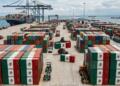
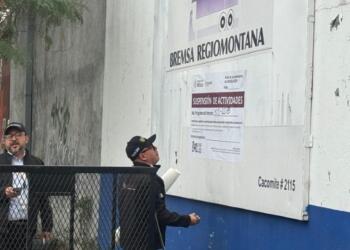
Since early this July 17th, voices from the private and public sectors have been heard within the framework of the 85th National Congress of Customs Agents of the Confederation of Associations of Customs Agents of the Mexican Republic (CAAAREM) , converging on the urgent need to modernize the Mexican customs system, a process in which it has been said that the federal government plans to send a reform to the Customs Law to Congress.
“The role of customs agents is central. They are natural allies of the customs institution and key players in driving a new standard of efficiency and compliance,” said Rafael Marín Mollinedo, head of Mexico’s National Customs Agency (ANAM) , when opening the event.
The ceremony brought together figures such as Alejandro Malagón Barragán, president of the Confederation of Industrial Chambers (Concamin) ; Gabriela Ortiz Merino, deputy attorney general of the Federal Attorney’s Office for Environmental Protection (Profepa) ; Rear Admiral Antonio Martínez Plancarte; customs and industrial sector associations, among others.
They all agreed on one premise: without strengthened customs, there is no competitive foreign trade .
In his message, Miguel Cos Nesbitt, president of CAAAREM, emphasized the meeting’s purpose: to renew the conviction that customs agents, with efficiency and commitment , are key to the country’s economic development and legal security.
“Let this congress be a meeting point, a place of reflection, and a driving force,” Cos Nesbitt said to a room packed with operators, authorities, and industry representatives.
One of the most moving moments of the day was the presentation of awards to customs agents with 25 and 50 years of experience , a tribute that highlighted the living history of those who have collaborated to develop, day after day, the pillars of the customs system.

In addition, the results of the 2025 National Customs, Logistics and Foreign Trade Survey were released , which stated that the perception of customs agents is mostly positive (more than 72% rated them as efficient or excellent), although areas for improvement were also noted in training, services and use of technology.
The document also revealed structural challenges : port congestion, poor road connectivity, poor freight transport safety, and a low level of environmental considerations in logistics.
During the conference, it was made clear that it is time for a comprehensive reform to modernize the Mexican customs system and prepare it to respond to the challenges of global trade.
But not a reform from a desk, but from the ground up: with the participation of those who operate the legal movement of goods every day.
Comment and follow us on X: @karinaquintero / @GrupoT21