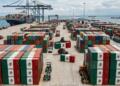
Mexico ‘s foreign trade sector faces a new wave of uncertainty with the imminent approval of the reform to the Customs Law , which seeks to tighten oversight of operations and profoundly change the dynamics of customs operations.
According to Sergio Islas Arias, general manager of SIEM Business , the changes are causing irritation among customs agents , primarily due to the amendment to Article 54 of the law, which establishes absolute responsibility for clearances on customs agents.
“Today, the initiative establishes that the agent will be 100% responsible for the clearance of goods. This means that if the importer provides incorrect information and there is an incident, the agent will be solely responsible. This will slow down operations and cause many to reject high-risk shipments,” he warned.
Another sensitive issue is the reduction in storage time in strategic bonded warehouses (RFE) , which would go from two years to just one.
While acknowledging that in many cases technology can facilitate the control and tracking of goods, for example, with low-cost disposable GPS devices, Islas warned that certain sectors, such as steel and copper, do require longer lead times.
“Reducing storage will affect industries that need more time to dispose of their goods. Furthermore, the possibility of customs escrow accounts is being considered, which will generate more paperwork and delays for importers,” he commented.
The specialist considered that the reform’s purpose is to increase tax revenue and close gaps in undervaluation , while the requirement to attach sales contracts and international transfers to files seeks to provide greater certainty about the real value of goods.
“What we’re seeing is an attempt to eradicate bad practices, but again, because a few end up paying the price, we all end up paying the price. The electronic file will be more robust, but that also makes operations more expensive and complicated,” he explained.
On the other hand, the reform adds to the recent tariff increases, which, according to an analysis by SIEM Business, will affect more than 1,400 tariff items.
“Everything is going up between 30% and 50%, from consumer goods to Chinese cars, which will pay up to 50% in tariffs. These increases, combined with the higher operating costs of customs brokers, will inevitably be passed on to the end consumer,” he noted.
While Islas acknowledged that oversight is positive in that it brings order to the sector and eliminates unprofessional intermediaries, he also questioned the severity of the reform.
“I think the authorities needed more thought. It wasn’t necessary to resort to such drastic measures. The law already provides for sanctions for those who violate it; it was enough to apply it. Now all that remains is to adapt, as we have always done in this rapidly changing sector,” he emphasized.
Comment and follow us on X: @jenna_GH_ / @GrupoT21