Canadian Pacific Kansas City (CPKC) has declined to participate in any immediate consolidation of the rail industry , despite suggestions from some that it might, saying it is not necessary for the industry as it is currently structured.
“We believe a transcontinental merger would trigger a permanent restructuring of the industry and result in a disproportionately large railroad whose size and scope would require others to take action,” said Keith Creel, president and CEO of CPKC.
He explained that if implemented, it would likely result in an unnecessary wave of railroad mergers , “which is not the best way to support American businesses or the public interest today, and has the potential to create more problems than it solves.”
The company, he stated, remains focused on delivering more benefits and unique value-creating opportunities from its tri-nation network, which connects shippers across North America through effective interline service options.
“CPKC firmly believes that, given what the existing competitive landscape has proven to offer, any major rail merger poses unique and unprecedented risks to customers, rail employees, and the broader supply chain. Those risks would be exacerbated by the inevitable subsequent consolidation,” he said.
In this regard, he noted that the six major railroads in the United States are capable of offering their customers high-quality , virtually seamless transportation services across the continent.
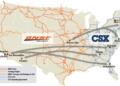
This, he said, as evidenced by CPKC and CSX ‘s previous partnerships in the Southeast, as well as the recently announced partnership between BNSF and CSX, remains an opportunity for further cooperation between railroads “willing” to improve service and preserve optionality for shippers.
He also noted that benefits in support of transcontinental mergers can be achieved through new and expanded industry partnerships , innovations in customer service, and additional cooperation among railroads.
“CPKC continues to pursue these opportunities, such as its recently announced collaboration with CSX on the Southeast Mexico Express service connecting the southeastern United States with Mexico,” Creel said.
Against this backdrop, he indicated that the U.S. rail network has the capacity and operational fluidity necessary to safely drive many years of service improvement, volume growth, truck conversion, and the resulting value creation for the nation’s rail carriers in support of the U.S. economy.
Comment and follow us on X: @GrupoT21