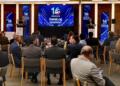
Collaboration is not an added value, it is the only way for logistics to work in an increasingly demanding environment. This was one of the central ideas shared by influential women in the sector during the Collaborative Development in the Supply Chain breakfast , organized by the National Council of Logistics and Supply Chain Executives (ConaLog) .
Inflationary pressure, road insecurity, operator shortages, and new regulations are increasing the demands on the supply chain , said Alejandra Álvarez , director of Road Freight at TIBA Group.
Logistics costs have also skyrocketed not only because of rising fuel prices, but also because of the increased cost of spare parts, growing road insecurity, and the additional pressure generated by the relocation of production lines ( nearshoring ), Álvarez explained.


Furthermore, new regulations such as the requirement that operators speak English to enter the United States could become bottlenecks if not addressed in a timely manner, warned Alejandra Álvarez.
In light of this, he commented that the operations department needs to be in constant communication with the commercial, financial, and purchasing departments to maintain the system’s balance.
For Claudette Pier , Global Director of Operations at Grupo Porteo , logistics efficiency is built with specific actions, even when resources are limited.
That’s why he called for a review of KPIs (key performance indicators), training staff in emergency protocols, and questioning Incoterms (international terms of sale that define responsibilities between buyer and seller in the transportation of goods).
Pier also called for an end to short-termism : many companies are betting on Artificial Intelligence (AI) or sustainability without even having basic processes or well-defined indicators.
“Strategies often remain in a very pretty PowerPoint presentation, but they don’t reach the operational level,” Pier said.
He recalled that it is the operations area that generates real value for the customer: “High barriers to entry are not built by sales, they are built by operations.”
From the land and automotive trenches , Paola Favela , CEO of the ZEIT Group , emphasized that behind each area there must be a specialized process.
Your company decided to focus exclusively on 3PL services for that sector, and based on that, it structured six internal pillars: objectives, marketing, sales, purchasing, finance, and operations.
In that industry, Favela said, brand positioning is crucial to landing a sales appointment, even more so than price.
“If the customer has heard from you before, they’re 70% more likely to open your email or answer your call,” Favela emphasized.
He also emphasized that a technically trained sales team is more likely to close deals, and that without a solid accounting department to ensure cash flow, the chain simply grinds to a halt.
“All the gears must work. If one fails, everything stops,” Favela said.
Additionally, Karina Quezada , Demand Planning and CPFR Manager at Laboratorios Le Roy , highlighted the importance of building strong relationships with suppliers to address the sector’s daily challenges.
Based on his experience in the pharmaceutical industry, he emphasized that logistics operations cannot rely solely on internal processes: they require dialogue, mutual trust, and a shared long-term vision.
“If we don’t build true alliances with those who accompany us in the chain, any unforeseen event turns into a crisis,” Quezada warned.
The experts agreed that logistical resilience is not built with trendy rhetoric, but rather with organizational culture, horizontal leadership, defined processes, and a long-term vision.
Comment and follow us on X: @karinaquintero / @GrupoT21