Having emerged as a thriving industrial zone, Chihuahua remains resilient in the face of an economic environment shaped by the United States’ protectionist policies. This state is therefore banking on its strategic position to attract investment, build industrial warehouses, and optimize logistics flows , even though tariffs have left some negative consequences.
Manuel Carrasco , director of the Foreign Trade Committee of Index Chihuahua , commented that tariffs have impacted some areas of the region, however, the movement of merchandise, both imports and exports through the state’s border crossings, continues to flow, even at higher percentages than the previous year, particularly in industries such as manufacturing.
“In terms of logistics, from the state capital to distribution centers in El Paso, Texas, a typical 53-foot box load takes between seven and eight hours, including transit on the Chihuahua-Ciudad Juárez highway, considered an essential ‘trade route,’ making these optimal times to meet on-time delivery requirements,” he emphasized.
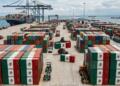
Carrasco explained that the flow of goods has not stopped, as companies in the region continue to produce. However, there is a significant challenge at the Zaragoza Bridge due to congestion during peak hours, as it remains the main freight crossing in the region.

Faced with this saturation, we have worked with companies to encourage them to use alternative bridges, such as the Guadalupe-Tornillo bridge , which has been heavily promoted to prevent exports from the southern region of the state and other entities from entering Ciudad Juárez, where around 3,500 crossings are currently made daily.
Despite these challenges, the flow of freight trucking remains efficient, which benefits this industrial and export-oriented entity in the northwest region of Mexico.
According to the National Institute of Statistics and Geography (INEGI) , in the first quarter of 2025, Chihuahua exported the equivalent of 21,320.7 million dollars (mdd) , a growth of 27.5% compared to the same cycle in 2024, which placed the state in first position nationwide in that period.
New projects in the entity
The state remains a key attraction for foreign investment, especially in Ciudad Juárez and Chihuahua, which are the most important centers of attraction. There have also been cases of reinvestment, meaning companies already established in the area are deciding to attract new projects and expand their operations.
According to the Ministry of Economy , Chihuahua captured $440.5 million in Foreign Direct Investment (FDI) in the first quarter of 2025 , mainly in sectors such as automotive, aerospace, and medical.
The Intermex Operations Manager also indicated that there is interest from investors, particularly North American and Asian investors.
“Currently, negotiations are underway for investments and reinvestments in the state in the metalworking, automotive, aerospace, communications, medical, plastics, and electronics sectors,” he explained, although he did not name the companies involved.
In this regard, he explained that North American companies are exploring investment in the state due to its proximity to the United States and the partial tariff exemptions granted by the United States-Mexico-Canada Agreement (USMCA) , as well as the region’s experience in high-tech manufacturing processes.
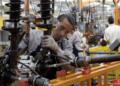
Manufacturing clusters in Ciudad Juárez facilitate agile cross-border logistics and just-in-time operations , especially for companies in the electronics and automotive industries.
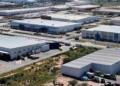
On the other hand, the industrial park sector has grown steadily, with sufficient supply of warehouses and land to meet the demand for new projects.
“The issue of industrial parks and attracting companies is undoubtedly something that has been done correctly in the city for many years, so we have enough space and industrial parks, specifically 10 in Ciudad Juárez, to ensure investors have a smooth landing,” the executive emphasized.
 A path with cautious optimism

The key to Chihuahua’s success lies in its synergy. Collaboration between the private sector, the three levels of government, and educational institutions has created an environment of investor confidence. This work, along with a skilled workforce and solid working conditions , has allowed the state not only to withstand the onslaught of foreign policy but also to continue attracting new investment.
Although the future is uncertain, Manuel Carrasco is confident that as long as the USMCA remains in place, Mexico will continue to be an attractive and strategic market for investment, including in the logistics and trucking industries.
The state will expand its manufacturing and logistics capacity with the San Jerónimo Economic Development and Well-being Hub , which will cover 60.3 hectares. According to Carrasco, this hub will be able to develop industries such as automotive, aerospace, medical, and electronics.
“These are the sectors we’ve seen as the most vibrant, with the most reinvestment, the most announcements of new projects, constant research, and a constant search for industrial parks and new buildings, both for merchandise storage and for investment in new machinery,” he emphasized.
Looking ahead, Chihuahua, like other Mexican states, is experiencing periods of tariff, trade, political, and governmental uncertainty, but with a significant network of industrial parks, a robust manufacturing industry, and trucking , the state is emerging as a resilient logistics hub .
Comment and follow us on X: @Eliseosfield / @GrupoT21