The reduction in operations at Mexico City International Airport (AICM) , the relocation of cargo to Felipe Ángeles International Airport (AIFA) , among other actions, were carried out as a result of a technical and not a subjective decision, therefore there is no justification for any possible sanction by the United States government in air matters, assured Claudia Sheinbaum, President of Mexico.
“The definition of the number of flights at AICM and AIFA is determined technically; it’s not a subjective decision; it’s a technical decision based on the safety and proper functioning of both airports, along with Toluca. Therefore, the decisions are technical,” Sheinbaum asserted.
He maintained that there is no basis for what the United States Department of Transportation (DOT) mentioned in terms of these changes having been against any American airline, ” the decision was for safety and for the good operation of the airports and any change has to be a technical decision; it cannot be a decision just like that.”
It should be remembered that due to the saturation of the AICM , in 2022 the government authorized a reduction during the winter season , from 61 to 52 operations per hour during the saturated schedules of 7:00 a.m. to 10:59 p.m. While starting in January 2024, when a decree was imposed, the reduction from 52 to 43 takeoff and landing operations per hour was ruled out, ruling out international flights. Although it was recently increased to 44 operations.
This decision was made after an analysis conducted by the Mexican Air Navigation Services (Seneam) and the airport itself.
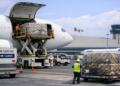
By 2023, by presidential decree, the designated cargo was moved from the AICM to the Felipe Ángeles Airport, under the same argument: the saturation of this infrastructure, “therefore, in order to safeguard the safety of air operations and the safety of users, it is necessary to transfer the cargo to the airport network available in the country,” the government stated at the time. The destination: AIFA.
Sheinbaum reiterated that they will continue making changes at both airports because it’s something that “has worked well,” and they will continue with the adjustments to customs and fiscal areas.
According to data from the Federal Civil Aviation Agency (AFAC) , air cargo transported in Mexico last year showed an annual growth rate of 5.6%, with 1,263,585.6 tons, or 67,497 tons more than in 2023, AIFA led the top 10 of the airports that handled the most products.
The President of Mexico detailed that various works are being carried out at the AICM, such as that of Terminal 2 (T2), the remodeling of the facades for the 2026 World Cup. These works will be carried out by the Navy and will be completed between April and May 2026, with an investment of 8 billion pesos.
He stated that they have not received any formal notification from the DOT so far, but emphasized that the decisions made regarding the AICM and AIFA were based on technical studies .
“Mexico is sovereign. There’s no reason to impose any sanctions related to this matter. What was prioritized? Security, and we’ve already heard that the airport (AIFA) is doing very well. This December it will receive new international flights, cargo is also performing very well, fiscal areas and customs are being strengthened to make cargo exits even more efficient, and we’ll be able to maintain communication. The decision to build the airport in Santa Lucía was a very good one. Imagine what would have happened if they had continued with the airport in Texcoco,” he explained.
Meanwhile, the National Chamber of Air Transport (Canaero) called for technical and constructive dialogue , as the measures announced by the U.S. government represent a significant impact on the airline industry, with potential repercussions on connectivity, trade flows, and the competitiveness of the sector between the two nations.
“We consider it essential to move toward joint solutions based on dialogue and cooperation. We recognize that the actions taken by the Mexican government have responded to criteria of security, operational efficiency, and improvement of metropolitan airport infrastructure, as part of a comprehensive strategy to guarantee the development of the sector,” the organization stated in a statement.
Therefore, he indicated that communication , technical, and institutional coordination mechanisms are needed to address the concerns raised by the United States government, preserving bilateral cooperation and avoiding further impacts on the industry.
He also reiterated his commitment and collaboration to strengthening a modern, efficient, and functional civil aviation system that guarantees equitable conditions, operational continuity, and sustainable development for the airline industry.
For their part, Aeroméxico and Delta reported that they are continuing to review the DOT order and will submit a joint response in the coming days.
On July 19, the U.S. Department of Transportation (DOT) announced it will impose measures on Mexico for alleged noncompliance with the 2015 Air Transport Agreement and its continued anticompetitive behavior beginning in 2022.
In this regard, Mexican airlines will be required to submit applications to the DOT for all their operations in the United States. Prior approval is also required for any charter flights of large passenger or cargo aircraft to or from the United States. The Antitrust Immunity (ATI) between Delta and Aeroméxico will also be waived, thereby taking corrective measures to address competitive issues in the market.
Given this scenario, the International Air Transport Association (IATA) urged both governments to engage in direct dialogue to resolve the current problems related to the bilateral air services agreement between the two countries.
“The aviation market between the United States and Mexico is one of the largest in the world between neighboring countries and a key driver for both economies. We hope both parties will engage in direct government-to-government dialogue to seek balanced and constructive solutions for all involved,” stated Peter Cerdá, IATA’s Regional Vice President for the Americas.
He pointed out that the agency has maintained contact with Mexican authorities for many years, promoting adherence to the globally accepted World Airport Schedule Guidelines (WASG) . “This work remains a priority, given that several airports in the country, especially AICM, continue to face capacity constraints.”
Comment and follow us on X: @evandeltoro / @GrupoT21