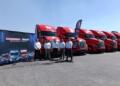
During the presentation of the results of the internal electoral process of the National Chamber of Freight Transportation (Canacar) , the president-elect, Augusto Ramos, outlined the key points that will mark his administration for the 2026-2027 period and confirmed the integration of Rómulo Mejía Durán as general vice president of the organization .
The announcement came after an irreversible trend in their favor was confirmed, in a process that the current president, Miguel Ángel Martínez, described as orderly, transparent and in accordance with the statutes, highlighting the participation in 28 voting centers and the beginning of an institutional transition towards the Ordinary General Assembly on March 2, when the swearing-in of the new National Executive Committee will be formalized.
Five pillars for the 2026-2027 management
In his first message, Ramos assured that his administration will be governed by five non-negotiable principles: radical transparency, permanent accountability, participatory and decentralized government, data-driven decisions, and inclusion without exceptions.

The proposed actions include the periodic publication of management reports , the implementation of a dashboard to measure commitments, and the holding of regional forums to decentralize decision-making. He also indicated that he will rely on technical assessments and statistical analyses, in coordination with specialized institutions, to support the sector’s defense before the authorities.
He emphasized that the Chamber will represent companies of all sizes with equal strength, from single-unit carriers to large fleets.
Security, USMCA and operators at the center
Ramos identified security as the union’s top demand. He proposed promoting secure strategic corridors with technology and real-time coordination, as well as strengthening collaboration with federal and state authorities.
Internationally, he announced that in March they will deliver a diagnosis to the Ministry of Economy on the relevance of road transport in the review of the USMCA, noting that the sector moves most of the goods that pass through the country and participates in more than 100 industrial branches.
Another key focus will be professionalization. The president-elect indicated that they will aim to train more than five thousand operators in the coming year, addressing a shortage that has left thousands of vehicles idle due to a lack of drivers. He also proposed strengthening ongoing training and improving the working conditions of operators as a foundation for competitiveness.
Fleet renewal and institutional strengthening
Regarding vehicle modernization , Ramos acknowledged the drop in sales of new vehicles during 2025 and noted that renewal will require coordinated work with manufacturers and financial institutions, as well as the management of incentives that encourage the replacement of vehicles.
Finally, he reiterated that his presidency does not seek to divide, but to consolidate the organization, and highlighted the incorporation of Rómulo Mejía Durán to the General Vice Presidency as part of a project of union unity.
With this change, Canacar opens a new stage focused on institutionality, verifiable results and greater closeness with the rank and file of the trucking industry.
Comment and follow us on LinkedIn: @Karina Quintero / @GrupoT21