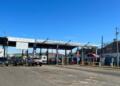
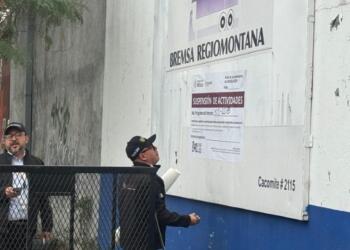
In the last six months, Mexico’s National Customs Agency (ANAM) has seized more than 80 million liters of illegal hydrocarbons through various modes of transport, dealing a blow to smuggling worth more than five billion pesos .
Alex Tonatiuh Márquez Hernández, director general of Customs Investigation at ANAM, stated that they have identified companies that have participated in these actions, which have become richer in less than two years. These companies begin by declaring smaller quantities of products, different tariff fractions, food supplies, among other things.
“It’s a network of connections, because the scale of the assets we detected was immeasurable. We can’t say there was an omission when there was collusion. They’re migrating. They saw that we started detaining ships at different ports. Now it’s become easier, because we’re going through railroads, and they saw that we started detaining many railroads, more than 254, which represents more than 50 million liters, and they returned to the tanker scheme. We have very well identified the customs offices that have contraband, the customs agents who contribute, mainly at border customs offices, which is where we have detected them, and the companies that have been migrating,” he explained.
Márquez Hernández emphasized that this type of conduct has been uncovered through the use of pre-validators, who validate hydrocarbon petitions even if they are not dedicated to this sector. “We have even skipped chapters; we have detected hydrocarbon smuggling, declaring fuel as paprika, ethylene, methanol, or calcium hydrochloride .”
During the ANAM-CAAAREM master class on Hydrocarbon Import Practices , he commented that less than 10% of customs agents carry out illicit practices in the handling of hydrocarbons.
To date, 903 foreign trade transactions have been analyzed, revealing that customs agents working with huachicol are experiencing higher rates of smuggling, technical smuggling, and undervaluation.
As a result of the analysis work with the Attorney General’s Office (FGR), 20 investigation files have been reviewed, identifying and seizing merchandise imported by companies such as Logística y Asesoría Aduanera R&R Asociados, Servicios Aduanales JR, and Ingemar , the latter involving the tanker truck operation detected on July 7.
“(Ingemar) was so aware of the illegal act that two hours before we detained them, at the moment we stopped the train, he sought to rectify the request. This means that it is not an omission by the customs agent, but rather he is in contact with the importer and with the person committing the criminal act, and they are waiting in case the authority is careless,” he explained.

Under this scenario, he emphasized that they will continue working to detect personnel involved in crimes, verify hydrocarbon imports, and export merchandise, in coordination with railways and other suppliers abroad.
Javier Coello Zuarth, director of the Coello Trejo y Asociados law firm , emphasized that some of the recommendations for handling this type of merchandise include knowing the client, their corporate purpose, having documentation that supports the foreign trade operation, tariff classification, permits, among others.
“It’s not just that we’re the ones being investigated in a case file we have nothing to do with. As criminal lawyers, we can use this information to help authorities find those truly responsible for any illegal introduction of merchandise into the country,” he said.
José Ignacio Zaragoza Ambrosi, president of the Confederation of Associations of Customs Agents of the Mexican Republic (CAAAREM) , said that it is a strategic issue and is linked to national security and the country’s stability.
“The hydrocarbon sector is one of the most sensitive and strategic sectors for Mexico, affecting not only the economy but also strategic energy security and social stability. Therefore, CAAAREM’s technological expertise and professional organization are at the service of the Mexican government to strengthen the work of ANAM and guarantee modern and secure customs,” he commented.
He emphasized that the agency is cooperating with alerts on the pre-validator, which allows for the detection of irregularities in real time and the prevention of high-risk operations, digital audits on the behavior of petroleum imports, the design of more effective strategies and controls, and operational and technical advice.
Comment and follow us on X: @evandeltoro / @GrupoT21