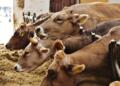
Following a new case of screwworm detected in Ixhuatlán de Madero, Veracruz, the United States Department of Agriculture (USDA) has again halted imports of Mexican cattle , following a previous announcement authorizing a gradual reopening starting July 7.
The USDA stated in its statement that the closure is “effective immediately.” The measure also cited Mexican authorities’ failure to provide accurate and timely information about the spread of the pest.
He argued that the goal is to protect American cattle herds and the national food supply.
“The U.S. Department of Agriculture had announced a phased, risk-based reopening strategy for the importation of Mexican cattle, bison, and equines,” recalled USDA head Brooke Rollins, quoted in the statement.
According to the planned schedule, the reopening of Mexican cattle crossings to the United States would begin on July 7 at the port of Douglas, Arizona. Meanwhile, crossings would open on July 14 in Columbus, New Mexico; on July 21 in Santa Teresa, New Mexico; on August 18 in Del Rio, Texas; and on September 15 in Laredo, Texas.
“To reactivate the livestock trade, significant progress will need to be made in combating the worm in Veracruz and other nearby Mexican states before reopening livestock ports along the southern border,” Rollins emphasized.
Following the discovery, the federal office called on Mexican authorities to implement stricter controls on animal movement, as well as ongoing surveillance , trapping, and the use of proven scientific methods to stem the screwworm infestation.
Reactions to the suspension of reopening
The measure has come as a shock to companies in the sector, which have already reacted. In a statement, the Mexican Meat Producers Association (AMEG) reaffirmed its collaboration to ensure the traceability, safety, and health of cattle destined for export.
Separately, the National Association of Federal Inspection Establishments (ANETIF) reiterated that “the TIF system guarantees meat safety, even in health emergency situations, and that these decisions affect the operation, exports, and logistics of certified plants, in addition to causing millions in losses for both countries.”
He added that this new case, reported by the National Service of Health, Safety and Food Quality (Senasica) and confirmed by U.S. authorities, is located outside the current dispersal zone of sterile flies, which raises concerns about a possible expansion to the north of the country .
Meanwhile, Mexican President Claudia Sheinbaum reported this morning that technical teams are already working to control the screwworm infestation detected in Veracruz, and she hopes that cattle exports to the United States will resume “very soon.”
In his morning press conference, he called the closure of the U.S. southern border “totally exaggerated” and said that “everything that scientifically and practically should be done is being done.”
On May 11, the United States suspended the import of Mexican cattle due to a screwworm infestation detected in Oaxaca and Veracruz.
The screwworm plague has deeply affected the Mexican livestock sector, which suffered a 64% drop in exports between January and May 2025, according to the Agricultural Markets Consulting Group (GCMA) .
This figure meant a decrease in the volume of shipments abroad, falling from 640,000 head in 2024 to only 233,000 head in 2025 during the reference period.
This represented an economic loss of 53% , as exports went from $605 million in the first five months of 2024 to $287 million in the same period of 2025.
Comment and follow us on X: @GrupoT21