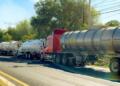
The National Energy Commission (CNE) granted a 15-year permit to the Maya Train for the transport of petroleum products by tanker truck or semi-trailer by various means, although to do so it must comply with a series of regulations applicable to this activity .
According to the permit title, this activity will be subject to the Law of the National Energy Commission (LCNE), the Law of the National Agency for Industrial Safety and Environmental Protection of the Hydrocarbons Sector and its Regulations, among others.
Carlos Barreda Westphal, director of Ferroviaria.mx , emphasized that the Tren Maya’s obtaining the permit to transport fuels is in accordance with the original project, which included a mixed rail operation for tourism and cargo, even with a connection to the Interoceanic Corridor.
“However, this does not mean that the state-owned company will begin operating these transfers in the short term, as it will first be necessary to comply with a large catalog of official regulations that apply to this very specific activity. These range from the most recent regulations on the use of geolocation devices and QR codes on tank trucks, to operational safety, the handling, operation, and functionality of all cargo-hauling equipment, as well as those related to the handling of hazardous materials, emergency response protocols, and more,” he explained.
The document specifies that, among other things, it must designate operators who meet the characteristics and technical requirements necessary to operate the vehicles, contract and maintain valid insurance against damages, transport the authorized products, to mention a few.
Barreda Westphal considered that the incorporation of this mode of transport will bring important economic benefits not only for the railway “which truly needs them, but also for the southeast of the country.”
“Specialized jobs will once again be created in the region due to the very nature of its operation. It will surely attract national and foreign investment specializing in logistics, and will also reduce tanker truck traffic on the main routes longer than 200 kilometers (km). However, the biggest challenge will be consolidating a safe operation combined with passenger transport service along the 1,500 km of the Mayan circuit,” he said.
It is worth remembering that in 2025, the federal government started the works for the construction of the freight infrastructure of the Maya Train through the Felipe Ángeles Engineering Group of the Ministry of National Defense .
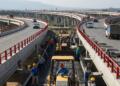
This project includes 10 cargo complexes with five intermodal terminals: Poxilá, Progreso, Cancún, Palenque and Chetumal, four operations yards and a fuel spur interconnected through the 1,553 km of railway already built.
The first phase of the works includes the construction of the intermodal terminals of Poxilá and Progreso, Cancún and Palenque, as well as the construction and rehabilitation of a railway bypass and two branches between Mérida and Progreso, of 70 km of railway tracks, of which 40 km will be new construction and 30 km of rehabilitated tracks.
Comment and follow us on LinkedIn: @Evangelina del Toro / @GrupoT21