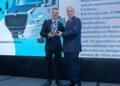
The trucking industry in Mexico faces not only cost and competitive pressures, but also a factor that continues to affect the daily operations of many companies: road safety . For Transportes Calesa , this environment has become one of the main challenges to sustaining its operations and maintaining service continuity, according to Wendy Cano León, the company’s Administrative and Logistics Manager, who was also recognized as one of the 100 Women in Transportation and Logistics in 2025.
Vehicle thefts represent one of the most significant challenges for the company. Beyond the economic impact, they cause operational disruptions and require constant adjustments to continue serving their customers. “We are part of the statistics,” Cano remarked, referring to the incidents they have faced.
According to the National Association of Vehicle Tracking and Protection Companies (ANERPV) , the incidence of crime (in the first quarter of 2026) was concentrated in specific corridors, mainly in entities such as the State of Mexico, Puebla and Guanajuato , as well as on key routes such as Mexico 57 and Mexico 150D, where the probability of events remains high.
Furthermore, around 80% of highway robberies occur in heavy goods vehicles , reinforcing the need for more precise risk management in road transport.
From their experience, the lack of sufficient coverage on highways and the limited presence of surveillance in certain sections continue to be factors that keep the sector exposed, as they hinder the prevention of crimes and reduce the capacity to respond to incidents, leaving carriers in more vulnerable conditions during their journeys.
This context not only affects security , but also the way companies operate, forcing them to strengthen controls, adjust processes, and maintain constant supervision on every trip.
In this way, Cano León explained that Transportes Calesa has reinforced its operational processes to maintain the continuity of service in a complex environment, with greater attention to the monitoring of each trip and to safety conditions .
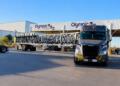
In that sense, the company maintains its focus on the transport of industrial materials and supplies. It works “with 30-cubic-meter gondolas or hoppers , full-size units, and tankers , for both general cargo and specific materials, including silica sand, which implies constant monitoring and precise control in each shipment,” he explained.
The company’s history dates back to 1980, when the family acquired their first truck. From there, they began a gradual growth within the trucking industry, until formalizing the company in 1990 under the name Transportes Calesa. Since then, it has remained a family business in which different generations participate directly in its operations.
That origin also defines its way of working. The company has chosen to differentiate itself through service, prioritizing close customer relationships and direct oversight of each operation. “We don’t compete on price, we compete on quality and responsibility,” Cano stated.
This approach translates into personalized service, where the owners themselves participate in the operation, monitor cargo conditions, and respond directly to any eventuality. In a market where conditions are not always equal for all participants, this model has become their main strength.
Furthermore, the company continues to advance in the sector, sustaining its operation based on experience, family work and a clear commitment to service as the core of its development.
Comment and follow us on LinkedIn: @Karina Quintero / @GrupoT21