Inflation in Mexico accelerated again in March 2026, driven by the rise in agricultural products and services such as air transport , after the increase shown last February, when it stood at 4.02% at an annual rate, the National Institute of Statistics and Geography (Inegi) announced .
According to the agency, in the third month of the year, the National Consumer Price Index (INPC), which measures the variation in prices of a basket of goods and services, registered an increase of 0.86% compared to the previous month. With this result, the overall annual inflation rate was 4.59% .
“The increase in some agricultural products and the effects of the conflict in the Middle East on energy led to inflation reaching its highest level since October 2024,” the Financial Group Ve por Más (BX+) indicated in an analysis.
According to Inegi, the core price index – which does not take into account the most volatile goods and services – increased 0.38% monthly , with a rise in the prices of goods of 0.29% and an increase of 0.48% in the prices of services.
“The underlying inflation rate declined slightly, but has remained above 4% for 11 consecutive months despite the fragility of economic activity. Goods prices fell, likely as the effect of January’s fiscal adjustments diminishes and given the currency appreciation of previous months. Conversely, services prices rebounded and are showing variations greater than their historical average despite a fragile economic context,” BX+ explained.
The non-core price index —which includes goods and services whose prices are subject to fluctuations— rose 2.46% month-on-month . Within this index, fruit and vegetable prices increased 10.75%, and energy and regulated tariffs rose 0.85% month-on-month, reflecting price pressures on various frequently consumed products and services in Mexico.

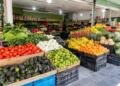
The increase in inflation in March is mainly explained by a rebound in the price of agricultural products such as cucumber with a rise of 42.71%, tomato with 42.01%, air transport with an increase of 26.28%, lemon with 18.26%, green tomato with 16.46%, potato and other tubers with 14.92% and chicken with 2.82% monthly.
Conversely, the products with the greatest decrease in their cost during the cycle were nopales with a drop of 8.86%, papaya with 4.40%, internet, telephone and pay television packages with 3.59%, eggs with 2.69%, beans with 1.34% and pork with a decrease in its price of 1.28% on a monthly basis.

Among the states with the largest monthly increases in the National Consumer Price Index (INPC) were Guerrero, Puebla, and Tlaxcala . Meanwhile, Chihuahua, Baja California Sur, and Yucatán were among the states with variations below the national average.
According to Ve por Más’s analysis, the annual variation of the INPC “accelerated for the third consecutive month, adding two readings above 4% (upper limit of the Bank of Mexico ‘s tolerance range ) and reached highs since October 2024″ .
“The pressure came from the non-core index, given the marked reversal in agricultural products and –as a result of the conflict in Iran– the greater dynamism in energy,” he explained.
The financial institution considered that “the inflationary outlook has deteriorated ,” and therefore raised its year-end inflation forecast from 3.9% to 4.1%.
Comment and follow us on LinkedIn: @GrupoT21