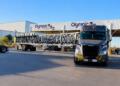
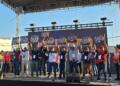
Highway insecurity has once again become the central issue. Not just as a topic of discussion, but as an operational reality. Blockades on various stretches of road across the country, exposed drivers, and stranded goods have demonstrated that the problem is not merely a matter of perception. It is structural. And in this context, the president of the National Chamber of Freight Transportation (Canacar) , Augusto Ramos, outlined a position that attempts to navigate between two lines: acknowledging the official figures while simultaneously admitting that the reality on the roads does not yet align with them.
During the presentation of the results of his first month in office, Ramos outlined the progress made in dialogue sessions, institutional coordination, and actions to address the main challenges of the sector, in an environment marked by road insecurity.
Official data points to a decrease in cargo theft of around 21% by 2025. However, the violence with which these crimes are committed and the vulnerability of drivers continue to put pressure on the sector. “The theft is very aggressive,” Ramos warned, and insisted that the challenge is not only to reduce the number of crimes, but also to better understand what is really happening on the road.
That’s where the contrast emerges. While official figures show a downward trend, reports of extortion, kidnappings, and assaults persist in daily operations . Far from dismissing either perspective, Canacar chose to develop its own.
Since March, the Chamber has begun collecting direct information from companies, operators, insurers and tracking systems, with the intention of cross-referencing it with the authority and, if necessary, confronting it.
The next step will be to institutionalize this process. In its first 100 days in office, the Chamber plans to establish a system for reporting cases of extortion and corruption. The stakes are high: if the reports consistently point to irregularities, they could even lead to the dismissal of public officials .
Meanwhile, the operation continues to set the pace. In March alone, four armed attacks against operators were recorded, one of them fatal. And while direct crime is the focus, road blockades amplify the problem: they stop goods, raise costs, and increase the risk of theft in a country where more than 80% of cargo is moved by road.
This interpretation is complemented by another perspective within the sector. Some companies have reported a decrease in thefts , but this is not necessarily attributable to improved public safety; rather, it stems from increased investment in technology, monitoring, and prevention. This opens a second line of analysis: if the reduction is due more to private strategies than to structural conditions, the underlying problem may persist.
Diesel and structure: the pressure that doesn’t let up
Adding to this pressure is diesel , the other major challenge for the trucking industry . Fuel represents about 30% of operating costs, and any price fluctuation immediately impacts rates. Ramos explained the equation: “For every peso the price of diesel increases, freight costs can rise by around four percent.”
The problem, however, is not within the sector’s control. Ramos acknowledged that fuel prices are driven by global factors , so companies have had to rely on both government incentives and their own operational efficiencies. Even so, the margin is getting narrower.
In this context, the sector’s very structure explains some of its limitations. He stated that more than 215,000 companies hold concessions, according to data from the Ministry of Infrastructure, Communications and Transportation (SICT) , but only about 15,000 are formally registered with the Mexican Social Security Institute (IMSS) . Furthermore, 97% are micro and small businesses, and more than 80% operate with fewer than five vehicles, Ramos explained.
With that profile, the room for maneuver is limited. Therefore, according to Ramos, Canacar has begun to strengthen its internal operations with 25 committees and 23 commissions, in addition to permanent working groups that seek to address issues such as safety, training, and operational efficiency simultaneously.
At the same time, the Chamber has chosen to strengthen its ties with the industry. Through alliances with manufacturers and suppliers such as Daimler , International , and Cummins , it seeks to provide carriers with training programs, financing, and preferential terms that facilitate fleet renewal, especially in the segment that accounts for more than half of the country’s trucks.
Meanwhile, the sector is also observing the first steps in the fleet renewal program promoted by the federal government. Canacar indicated that it already has the guidelines that will define access to these incentives, focused primarily on micro and small carriers, although it acknowledged that this is only a first step in addressing the structural shortcomings facing the fleet.
Operators: the challenge that keeps growing
But even with these efforts, the sector faces a challenge that cannot be solved solely through financing or regulation: a shortage of drivers . Currently, the deficit exceeds 90,000 drivers, a trend that is not unique to Mexico.
Added to this is the generational shift that is beginning to put pressure on the sector, with almost 15,000 operators retiring , widening the gap between supply and demand. Faced with this scenario, Canacar proposes improving training, increasing the number of new operators trained—currently around 4,000 per year—and incorporating new sources of talent, including migrants.
Faced with this situation, the Chamber’s strategy has focused on three key areas: building its own data, maintaining ongoing dialogue with the authorities, and exerting institutional pressure based on evidence. The intention is clear: to move beyond reaction and toward prevention.
The challenge, however, remains balancing two realities. On the one hand, figures that point to improvements. On the other, an operation that is still perceived as vulnerable. Amid this tension, the trucking industry continues to keep the country moving, while attempting to bring order to a sector facing pressure from all sides.
Comment and follow us on LinkedIn: @Karina Quintero / @GrupoT21